
How to Create a Cleaning Schedule for Your Business: A Practical Guide

Keeping commercial premises clean sounds simple enough until you have to manage it day after day.
Bins need emptying, washrooms need attention, floors need maintaining and staff kitchens can become untidy surprisingly quickly. Add meeting rooms, reception areas, shared equipment and unexpected spills, and it becomes clear why cleaning can be difficult to manage without a proper plan.
For businesses that rely on employees to handle some cleaning tasks, responsibilities can become blurred. For those using an external cleaning company, an unclear specification can lead to missed tasks, inconsistent standards and unnecessary frustration.

A well-planned commercial cleaning schedule helps prevent these problems. It sets out what needs to be cleaned, how frequently each task should be completed and who is responsible for making sure it happens.
Whether you manage a small office, a large corporate building, a medical practice or a nursery, creating the right schedule can make workplace cleaning much easier to manage.
In this guide, we'll explain how to build a practical cleaning schedule that suits your premises, your budget and the way your business operates.
Why Does Your Business Need a Cleaning Schedule?
Without a written schedule, cleaning often becomes reactive. Someone notices that the kitchen is dirty, a washroom runs out of supplies or a visitor complains about the condition of the reception area. The problem is then addressed, but there is no guarantee it won't happen again.
A cleaning schedule provides a more consistent approach.
It helps your business:
Maintain a professional appearance.
Keep shared spaces clean and presentable.
Establish clear responsibilities.
Reduce the likelihood of tasks being overlooked.
Plan periodic maintenance.
Monitor cleaning quality.
Manage cleaning time and costs more effectively.
It also gives employees and cleaning contractors a clear understanding of what is expected.
The aim isn't to create unnecessary paperwork. It's to establish a routine that people can follow and managers can check.
Step 1: Assess Your Premises
Before writing a schedule, walk through the building and identify the areas that need attention.
Consider how each space is used, how many people use it and how quickly it becomes dirty.
Typical commercial areas include:
Reception and entrances.
Individual offices and workstations.
Meeting rooms.
Kitchens and staff breakrooms.
Toilets and washrooms.
Corridors and staircases.
Lifts and shared access areas.
Storage rooms.
Waste collection points.
Carpeted and hard-floor areas.
Don't assume that every room needs the same level of cleaning. A busy reception may need daily attention, while a rarely used storage room may only need periodic cleaning.
Make a note of any specialist requirements, delicate surfaces, security restrictions or areas that need to be cleaned outside normal working hours.
Step 2: Decide How Frequently Each Area Needs Cleaning
The right frequency depends on the building and how it is used. A small office with a handful of employees will have different requirements from a busy workplace with regular visitors and shared facilities.
As a starting point, divide your cleaning tasks into daily, weekly and periodic work.
Daily Cleaning Tasks
Daily tasks generally focus on hygiene, appearance and areas that receive frequent use.
These may include:
Emptying general waste bins.
Vacuuming or mopping floors as required.
Cleaning washrooms.
Cleaning kitchen worktops and sinks.
Wiping agreed surfaces.
Cleaning frequently touched points.
Cleaning reception and entrance areas.
Checking washroom consumables.
Removing visible marks and spillages.
Busy premises may also require daytime checks, particularly in washrooms, kitchens and public-facing areas.
Weekly Cleaning Tasks
Weekly tasks provide more detailed attention to areas that do not necessarily need cleaning every day.
Depending on the premises, these may include:
Detailed dusting of accessible ledges.
Cleaning door frames and skirting boards.
Cleaning internal glass partitions.
Wiping cupboard fronts.
Vacuuming accessible upholstered furniture.
Cleaning less frequently used rooms.
Removing cobwebs from accessible areas.
Detailed cleaning of selected kitchen surfaces.
Some of these tasks may need to be completed more frequently in busy environments.
Monthly or Periodic Tasks
Periodic maintenance helps address areas that accumulate dirt gradually.
Examples include:
Detailed cleaning behind movable furniture.
High-level dusting where safe and appropriate.
Machine scrubbing of suitable hard floors.
Detailed washroom descaling.
Internal window cleaning.
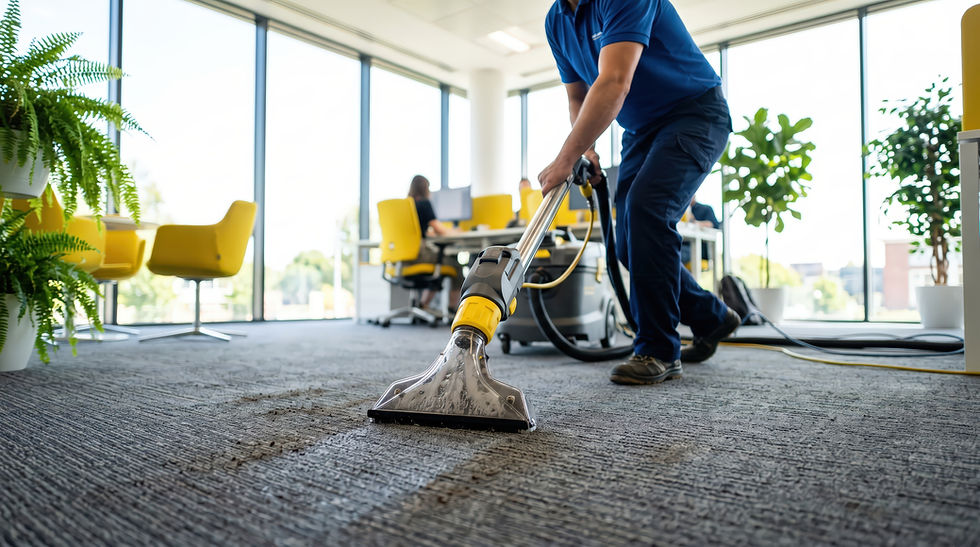
Carpet and upholstery cleaning.
Cleaning accessible vents and grilles where appropriate.
Not every task needs to be monthly. Some specialist services may be scheduled quarterly, twice a year or annually, depending on the condition of the premises and the manufacturer's maintenance recommendations.
Step 3: Consider Your Industry
A cleaning schedule should reflect the type of business you operate.
Offices
Offices generally require attention to desks, meeting rooms, shared equipment, kitchens, washrooms and reception areas.
The schedule should account for staff numbers, visitor traffic and whether the office is occupied throughout the day.
Medical and Dental Practices
Healthcare settings require additional consideration of infection prevention and control.
Cleaning responsibilities must be clearly divided between environmental cleaning staff and clinical personnel. Treatment equipment and clinical contact surfaces require procedures appropriate to the activity and relevant healthcare guidance.
A general office cleaning schedule should not be used as a substitute for a healthcare-specific cleaning plan.
Nurseries and Schools
Educational environments need a schedule that accounts for children, shared resources, food areas, toilets and the movement of people throughout the building.
Cleaning should be coordinated with the setting's safeguarding, hygiene and infection prevention arrangements. Areas used by children may need additional attention during outbreaks or after contamination.
Gyms and Fitness Centres
Gyms have high-use equipment, changing rooms, showers and communal touchpoints. Some areas may require repeated cleaning throughout the day rather than a single visit.
Equipment manufacturers' instructions should be followed when selecting cleaning products.
Step 4: Assign Clear Responsibilities
A schedule is only useful if everyone understands their role.
For each task, identify who is responsible for completing it and who checks that the required standard has been achieved.
Depending on your arrangements, responsibilities may be divided between:
Cleaning operatives.
Cleaning supervisors.
Facilities managers.
Office managers.
Clinical or departmental staff.
External specialist contractors.
For example, your cleaning contractor may be responsible for routine washroom cleaning and replenishing agreed consumables, while employees are responsible for clearing personal belongings from desks.
Avoid vague instructions such as "keep the kitchen clean". Instead, specify the expected tasks, such as cleaning worktops, sanitising the sink where appropriate, emptying bins and mopping the floor.
Clear instructions make accountability much easier.
Step 5: Build a Practical Cleaning Checklist
A checklist turns your schedule into something people can use during each visit.
For every task, record:
The area to be cleaned.
The task required.
The frequency.
The person or team responsible.
Any relevant safety instructions.
How completion will be recorded.
Any issues that need reporting.
A simple checklist is often better than an elaborate document that nobody uses.
For example, a daily washroom checklist might include cleaning toilets and basins, mopping floors, checking soap and toilet tissue, emptying bins and reporting any maintenance problems.
For specialist environments, include the relevant procedures, products and precautions rather than relying on a generic list.
Step 6: Allow Enough Time for the Work
One of the most common problems with cleaning schedules is that too many tasks are assigned to too little time.
If the allocated hours are unrealistic, operatives may be forced to prioritise visible areas while other tasks are left incomplete.
When estimating cleaning time, consider:
The total floor area.
The number of rooms.
Floor types.
The number of toilets and washrooms.
Kitchen facilities.
The amount of furniture.
Footfall and levels of soiling.
Access arrangements.
Required cleaning frequencies.
A site survey can help determine whether the proposed hours are realistic.
If the business grows or its requirements change, review the schedule and staffing allocation rather than expecting the same cleaning hours to cover additional work indefinitely.
Step 7: Choose the Right Cleaning Products and Equipment
Your schedule should identify the products and equipment required for the work.
Different surfaces need different treatments, and unsuitable products can damage flooring, furniture or fittings.
Consider the need for:
Commercial vacuum cleaners.
Suitable mops and buckets.
Microfibre cloths.
Colour-coded cleaning equipment.
Appropriate surface cleaners.
Suitable disinfectants where required.
Floor-cleaning equipment.
Personal protective equipment.
Cleaning chemicals should be stored safely, used according to their instructions and supported by appropriate COSHH assessments and staff training.
Where colour-coded equipment is used, make sure the system is clearly explained and followed to reduce the risk of cross-contamination.
Step 8: Introduce Quality Checks
Completing a task does not automatically mean it has been completed to the expected standard.
Quality checks help identify problems early and provide an opportunity to improve the cleaning programme.
Depending on the size of the premises, checks may include:
Reviewing completed checklists.
Inspecting washrooms and kitchens.
Checking floors and reception areas.
Reviewing reported issues.
Conducting periodic site inspections.
Gathering feedback from staff or the client.
When a problem is identified, record the action required and check that it has been resolved.
Quality inspections should support improvement rather than simply identify mistakes.
Step 9: Review the Schedule Regularly
A cleaning schedule should evolve with your business.
You may recruit more employees, introduce new facilities, extend opening hours or change how certain rooms are used.
These changes can affect the amount of cleaning required.
Review your schedule whenever there is a significant change to the premises or occupancy. It is also sensible to review recurring complaints, inspection findings and consumables usage to identify areas where the schedule could be improved.
A short, regular review can prevent small issues from becoming persistent problems.
Should You Manage Cleaning In-House or Outsource It?
Some businesses prefer to employ their own cleaners, while others use an external commercial cleaning company.
Managing cleaning in-house gives you direct control over staffing and routines, but it also means arranging recruitment, training, supplies, supervision and cover for absence.
An outsourced service can bring these responsibilities together under an agreed specification. Depending on the contract, the provider may supply trained operatives, cleaning equipment, products, supervision and cover.
The right choice depends on your business size, available management time, budget and the level of service you require.
If you outsource, make sure the cleaning schedule is part of the agreed specification and that there is a clear process for requesting changes.
A Simple Example of a Commercial Cleaning Schedule
For a typical office, a starting framework might look like this:
Daily: Washrooms, bins, kitchen worktops, entrance areas, floors as required and agreed high-touch surfaces.
Weekly: Detailed dusting, selected internal glass, skirting boards, door frames and less frequently used areas.
Monthly or periodically: Detailed floor maintenance, accessible high-level cleaning and selected deep-cleaning tasks.
As required: Spill treatment, stain removal, additional washroom attention and specialist cleaning.
This is only an example. Your actual schedule should be based on your premises, usage and hygiene requirements.
Final Thoughts
A good commercial cleaning schedule creates structure, consistency and accountability. It helps ensure that essential tasks are completed regularly, specialist work is planned in advance and cleaning standards are checked rather than assumed.
The most effective schedule is one that reflects the real needs of your premises, gives staff enough time to complete the work and can be adjusted as your business changes.
At Moonlit Cleaning Services, we provide fully managed commercial cleaning solutions for businesses across London. We work with clients to develop cleaning schedules tailored to their premises, operating hours and service requirements, helping maintain clean and professional workplaces without adding unnecessary management responsibilities.
If your current cleaning arrangements feel inconsistent or difficult to manage, we can help you review your requirements and put a more practical plan in place.
Frequently Asked Questions
What should a commercial cleaning schedule include?
It should list the areas to be cleaned, individual tasks, cleaning frequencies, responsibilities, required products and equipment, and the process for checking quality.
How often should a business review its cleaning schedule?
Review it whenever the premises, occupancy or requirements change significantly, and periodically assess whether the current routine is delivering the expected standards.
Should every area be cleaned daily?
No. High-use and hygiene-critical areas may need daily or more frequent attention, while some detailed tasks can be scheduled weekly, monthly or periodically.
Who should be responsible for checking cleaning standards?
Responsibility should be agreed in advance. It may sit with a cleaning supervisor, facilities manager, office manager or another designated person.
Can a commercial cleaning company create a cleaning schedule for my business?
Yes. A professional provider can assess your premises and recommend a schedule based on building size, occupancy, facilities, cleaning requirements and available hours.
Related Articles
The Ultimate Daily Office Cleaning Checklist for a Healthier Workplace
10 Common Office Cleaning Mistakes Businesses Make
What Is Included in a Commercial Deep Clean?
How Professional Office Cleaning Reduces Staff Sickness and Improves Productivity
Why Outsourcing Your Commercial Cleaning Saves Money
Need Help Creating a Cleaning Schedule for Your Business?
Moonlit Cleaning Services provides tailored commercial cleaning across London. Contact us to discuss your premises, arrange a site survey and receive a no-obligation quotation for a cleaning programme designed around your business.


Comments