
What Is Included in a Commercial Deep Clean? A Complete Business Guide

Even an office that receives regular cleaning can develop areas that need a little more attention. Dust collects on high shelves, marks build up around door handles, washroom fittings become difficult to keep spotless and carpets gradually lose their fresh appearance.
Daily cleaning is essential for maintaining a professional workplace, but some tasks require more time, specialist equipment or a different approach.
This is where commercial deep cleaning comes in.

A commercial deep clean focuses on areas that may not receive detailed attention during a routine cleaning visit. It can help restore the appearance of your premises, tackle accumulated dirt and prepare your workplace for a new season, a busy period or an important change.
However, the term deep clean can mean different things to different cleaning companies.
Understanding what is included makes it easier to compare quotations, set realistic expectations and ensure you receive the service your business actually needs.
In this guide, we'll explain what commercial deep cleaning involves, which areas should be considered and how to decide when your premises would benefit from one.
What Is Commercial Deep Cleaning?
Commercial deep cleaning is a more detailed cleaning service designed to address areas that routine cleaning may not cover fully.
Regular office cleaning typically concentrates on maintaining day-to-day standards. This includes emptying bins, vacuuming floors, cleaning washrooms, wiping agreed surfaces and keeping kitchens presentable.
A deep clean goes further. Depending on the premises and the agreed specification, it may include detailed cleaning of skirting boards, door frames, hard-to-reach areas, carpet extraction, intensive washroom cleaning and specialist floor treatment.
The precise scope depends on the building, its condition, the materials involved and the services requested.
A deep clean is not necessarily a substitute for regular cleaning. In most workplaces, the best results come from combining periodic detailed cleaning with a consistent maintenance schedule.
1. Deep Cleaning Office Workspaces
Desks and workstations can collect dust, fingerprints and everyday marks, particularly in busy shared offices.
A detailed office clean may include:
Dusting accessible surfaces and shelving.
Wiping agreed desk surfaces and office furniture.
Cleaning skirting boards and door frames.
Removing marks from suitable doors and walls.
Cleaning accessible ledges and window sills.
Vacuuming around furniture and accessible corners.
Cleaning shared touchpoints.
Removing cobwebs from accessible areas.
Electronic equipment requires particular care. Computers, monitors, keyboards and other devices should only be cleaned using methods and products suitable for the equipment, following manufacturer guidance.
Before work begins, agree which desks and surfaces can be accessed and whether staff need to clear personal belongings.
2. Kitchen and Breakroom Deep Cleaning
Staff kitchens are among the busiest areas in many workplaces. Food spills, grease and residue can accumulate even when the kitchen is cleaned daily.
A commercial kitchen deep clean may include:
Degreasing suitable worktops and splashbacks.
Cleaning cupboard fronts and handles.
Cleaning sinks, taps and surrounding surfaces.
Detailed cleaning of microwave interiors, where included.
Cleaning appliance exteriors.
Removing marks from doors and accessible wall surfaces.
Cleaning accessible areas around furniture.
Thoroughly cleaning and mopping the floor.
Cleaning bins and the surrounding area.
The inside of refrigerators, ovens, extraction systems and other specialist equipment should be included only where agreed and where it can be cleaned safely.
Commercial food preparation environments may have additional hygiene requirements. The cleaning specification should reflect the type of kitchen and its intended use.
3. Washroom and Toilet Deep Cleaning
Washrooms can quickly lose their fresh appearance because of limescale, soap residue, water marks and frequent use.
A detailed washroom clean may cover:
Thorough cleaning of toilets and urinals.
Descaling suitable taps and fittings.
Cleaning basins and splashbacks.
Polishing mirrors.
Cleaning cubicle partitions and doors.
Cleaning dispensers and accessible fixtures.
Detailed floor cleaning.
Cleaning accessible skirting boards and corners.
Removing suitable marks from doors and walls.
Cleaning waste bins and replenishing agreed consumables.
The products used must be appropriate for the surfaces and fittings. Different chemicals should never be mixed, and cleaning staff should follow product instructions and applicable COSHH procedures.
For busy offices, clinics and other customer-facing premises, periodic detailed washroom cleaning can help maintain a consistently professional appearance.
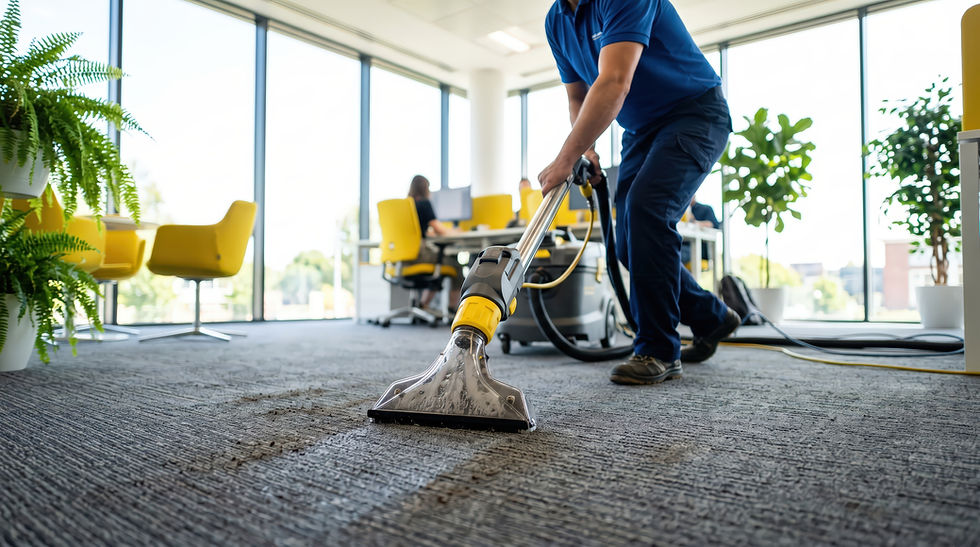
4. Professional Carpet Deep Cleaning
Carpets are exposed to foot traffic, dust, food crumbs and spills throughout the working day. Routine vacuuming removes loose dirt, but some soiling becomes embedded within the fibres.
Professional carpet cleaning may involve hot water extraction, low-moisture cleaning or another suitable method, depending on the carpet and its condition.
A typical service may include:
Initial inspection of the carpet.
Vacuuming to remove loose dirt.
Appropriate treatment of selected stains.
Application of a suitable cleaning solution.
Machine cleaning using the chosen method.
Extraction or removal of cleaning residue where applicable.
Advice on drying times and when areas can be used again.
Not every stain can be removed completely, and professional cleaning cannot reverse permanent fibre damage or discolouration. The contractor should explain any limitations before starting.
For guidance on maintenance frequency, see our article, How Often Should Office Carpets Be Professionally Cleaned?
5. Hard Floor Deep Cleaning
Hard floors can become dull as dirt, residue and scuff marks build up. Some floor types also require specific maintenance methods to protect their finish.
Depending on the surface, commercial floor cleaning may include:
Machine scrubbing.
Removal of accumulated dirt and residue.
Detailed cleaning of edges and corners.
Cleaning around furniture and accessible fixtures.
Appropriate rinsing or recovery of cleaning solution.
Application of a suitable protective treatment where specified.
Vinyl, stone, ceramic tile, wood and other flooring materials all have different requirements. A method suitable for one surface may damage another.
For this reason, floor condition and manufacturer guidance should be considered before selecting a cleaning method.
6. Internal Windows and Glass Partitions
Glass doors, partitions and internal windows often show fingerprints, smudges and dust more clearly than other surfaces.
A deep clean may include:
Cleaning accessible internal glass.
Removing fingerprints from glass doors.
Cleaning accessible frames and ledges.
Removing suitable marks from partition surfaces.
Detailing entrance and meeting room glass.
External windows, high-level glazing and specialist access work should be quoted separately unless expressly included.
7. High-Level and Hard-to-Reach Areas
Some of the most neglected areas are those that are difficult to reach during routine cleaning.
Depending on access and safety requirements, periodic detailed cleaning may include:
Accessible high-level ledges.
Door tops and frames.
Accessible light fittings.
Vents and grilles where suitable.
Corners and areas where cobwebs accumulate.
Spaces behind movable furniture.
Work at height requires appropriate equipment, training and risk assessment. Electrical fittings and ventilation systems may require specialist contractors rather than ordinary cleaning operatives.
Always confirm which high-level tasks are included in the quotation.
When Should Your Business Arrange a Deep Clean?
There is no universal schedule for every commercial property. Some premises accumulate dirt more quickly than others.
You may want to consider a commercial deep clean when:
Your office has not received detailed cleaning for several months.
Carpets have become noticeably dull or stained.
Washroom fittings have accumulated limescale.
Kitchens have built up grease or residue.
You are preparing for a client visit or important event.
You are moving into new premises.
Your business has completed refurbishment work.
You want to improve standards before beginning a regular cleaning contract.
Busy, high-footfall environments may benefit from more frequent specialist cleaning, while smaller offices may need it less often.
A site survey can help identify priorities and establish a practical maintenance plan.
How Much Does Commercial Deep Cleaning Cost in London?
The cost depends on the size of the premises, its current condition, the work required and the equipment or specialist treatments involved.
Important factors include:
Total floor area.
Number of rooms and floors.
Carpet and hard floor surfaces.
Condition of kitchens and washrooms.
Accessibility of high-level areas.
Whether furniture needs to be moved.
Cleaning hours and access arrangements.
Whether specialist services are required.
A small office needing detailed cleaning may cost considerably less than a large commercial property requiring carpet extraction, machine floor scrubbing and intensive washroom treatment.
Rather than choosing a quotation based on price alone, compare the task list, exclusions, proposed methods and expected results.
A clear specification helps prevent misunderstandings and makes it easier to compare providers fairly.
How to Prepare Your Premises for a Deep Clean
A little preparation can make the process more efficient.
Before the cleaning team arrives:
Agree the areas to be cleaned and the tasks included.
Arrange access, keys, alarms and any security requirements.
Ask employees to remove personal belongings from work surfaces where necessary.
Identify fragile equipment and areas that must not be accessed.
Discuss furniture movement and any heavy items that must remain in place.
Confirm whether work will take place during or outside business hours.
Agree drying times and any temporary restrictions on access.
For specialist environments, such as medical and dental practices, the cleaning plan should also account for infection prevention procedures and the responsibilities of clinical staff.
Choosing a Commercial Deep Cleaning Company
Not all cleaning contractors offer the same services. Before appointing a provider, ask for a written specification explaining what will be completed.
Look for a company that:
Has experience with premises similar to yours.
Uses appropriate equipment and cleaning products.
Trains staff in safe working practices.
Carries appropriate insurance.
Explains any exclusions clearly.
Provides a straightforward process for reporting concerns.
Can arrange work around your business hours.
Offers regular cleaning if you need ongoing maintenance.
A reliable contractor should be willing to assess your premises before recommending a service rather than quoting blindly for a job whose scope is unclear.
Commercial Deep Cleaning vs Regular Office Cleaning
The two services serve different purposes.
Regular office cleaning maintains everyday standards through tasks such as vacuuming, bin emptying, washroom cleaning and wiping agreed surfaces.
Commercial deep cleaning provides more detailed attention to selected areas, potentially involving specialist floor treatments, carpet cleaning, detailed descaling and cleaning of areas not covered during routine visits.
Neither replaces the other. A deep clean may deliver a noticeable improvement, but regular maintenance is what helps preserve those results.
Final Thoughts
Commercial deep cleaning helps businesses address the dirt and wear that routine cleaning may not fully remove. From carpets and hard floors to kitchens, washrooms and detailed office surfaces, the right service can improve presentation and support a well-maintained working environment.
The most important step is understanding what your premises actually need. A clear scope of work, appropriate cleaning methods and realistic expectations will help you get better value from your investment.
At Moonlit Cleaning Services, we provide tailored commercial cleaning solutions for businesses across London. Whether you need a one-off deep clean or want to combine specialist cleaning with an ongoing maintenance programme, we can discuss your premises and recommend a suitable approach.
Frequently Asked Questions
What is included in a commercial deep clean?
It can include detailed cleaning of workspaces, kitchens, washrooms, carpets, hard floors, internal glass and accessible high-level surfaces. The exact scope should be agreed before work begins.
How often should a commercial premises be deep cleaned?
It depends on footfall, building use and the condition of the premises. Some areas need specialist cleaning every few months, while others may only require it annually or when circumstances change.
Does a deep clean include carpet cleaning?
Not automatically. Carpet cleaning may be included in a bespoke package, but it should be confirmed in the quotation because specialist equipment and additional time may be required.
Can deep cleaning take place outside office hours?
Yes. Evening and weekend appointments can often be arranged to reduce disruption, subject to access and availability.
Is a deep clean a replacement for regular office cleaning?
No. Deep cleaning addresses more detailed or periodic tasks, while regular cleaning maintains day-to-day standards.
Related Articles
The Ultimate Daily Office Cleaning Checklist for a Healthier Workplace
10 Common Office Cleaning Mistakes Businesses Make
Why Outsourcing Your Commercial Cleaning Saves Money
How to Choose a Commercial Cleaning Company in London
Arrange a Commercial Deep Cleaning Survey
Moonlit Cleaning Services helps London businesses maintain clean, professional premises through tailored commercial cleaning solutions. Contact us to discuss your requirements, arrange a site survey and receive a no-obligation quotation.


Comments