
How Often Should Office Carpets Be Professionally Cleaned?

Office carpets have a difficult job. Every day, they collect dust, grit, food crumbs, muddy footprints and the marks left by hundreds of footsteps. Add coffee spills, office chairs moving across the floor and the occasional accident, and it's easy to see why even a well-maintained office carpet can begin to look tired.
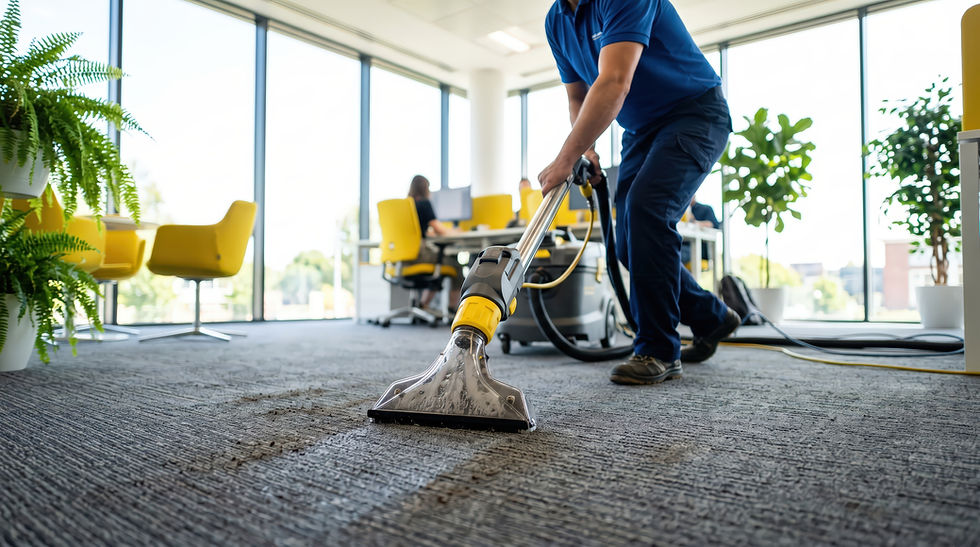
Regular vacuuming makes a difference, but it cannot remove everything trapped deep within the fibres. Over time, dirt builds up, stains become harder to remove and carpets can lose their original appearance.
So, how often should office carpets be professionally cleaned?
The answer depends on how busy your workplace is, the type of carpet you have and how well it is maintained between professional cleans. For most businesses, a planned carpet maintenance programme is more effective than waiting until the flooring looks visibly dirty.
In this guide, we'll explain how often to arrange professional office carpet cleaning, what signs to look for and how to keep your carpets in good condition for longer.
How Often Should Office Carpets Be Cleaned?
There is no single schedule that suits every office. A small consultancy with five employees will have different needs from a busy reception area or a large office with hundreds of daily visitors.
As a general guide:
Busy entrances and reception areas: Consider professional cleaning every three to six months, depending on footfall and soiling.
High-traffic corridors and shared spaces: Every three to six months may be appropriate.
General office areas: Every six to twelve months is a reasonable starting point for many workplaces.
Low-traffic offices: Annual professional cleaning may be sufficient if the carpets are maintained properly.
Spill-prone areas: Arrange prompt spot treatment and additional cleaning when necessary.
These are guidelines rather than fixed rules. Some commercial environments need more frequent attention, while others can maintain good results for longer.
A professional site assessment can help establish a realistic schedule for your premises.
Why Regular Vacuuming Isn't Enough
Vacuuming is essential for everyday carpet maintenance. It removes loose dirt before it becomes embedded in the fibres, helping the carpet look presentable between professional cleans.
However, vacuuming cannot remove every mark, oily residue or particle trapped deeper in the carpet.
Professional carpet cleaning uses suitable equipment and methods to remove accumulated soil more thoroughly. Depending on the carpet and its condition, this may involve hot water extraction, low-moisture cleaning or another method recommended by a competent specialist.
The correct approach depends on the carpet's construction, backing, installation and manufacturer's care instructions. Using an unsuitable method can cause shrinkage, colour bleeding or damage, so professional assessment matters.
What Affects How Frequently Carpets Need Cleaning?
1. Foot Traffic
The more people walk across a carpet, the more dirt it collects. Entrance areas are particularly vulnerable because shoes bring in grit, moisture and debris from outside.
Reception areas, corridors, lifts and routes between departments often need more attention than individual offices.
2. The Type of Business
Different workplaces create different cleaning challenges.
A customer-facing business may have a steady stream of visitors throughout the day. A medical practice may require carefully planned cleaning procedures, while an office with a large staff kitchen may experience more food and drink spills.
Cleaning frequency should reflect the way each area is actually used.
3. Carpet Colour and Material
Light-coloured carpets can show marks quickly, while darker carpets may conceal dirt that has already accumulated.
The material matters too. Some carpets tolerate particular cleaning methods better than others. Always follow the manufacturer's maintenance guidance and choose a method suitable for the specific flooring.
4. Existing Maintenance
Offices that are vacuumed regularly, have effective entrance mats and deal with spills promptly can often maintain their carpets for longer between professional cleans.
Neglected carpets may require more intensive treatment to achieve a satisfactory result.
Signs Your Office Carpets Need Professional Cleaning
You don't always need to wait for a scheduled date. Look out for these common warning signs:
Walkways look darker than surrounding areas.
Stains remain after routine spot cleaning.
Carpets have a persistent unpleasant smell.
Dust and debris are difficult to remove.
The pile looks flattened or matted.
Reception areas appear noticeably less presentable.
Staff or visitors have raised concerns about cleanliness.
If the carpet is badly worn or damaged, cleaning may improve its appearance but will not restore fibres that have permanently deteriorated.
Which Carpet Cleaning Method Is Best?
There are several professional carpet cleaning methods. The most suitable option depends on the carpet, the amount of soiling and how quickly the area needs to return to use.
Hot Water Extraction
This method applies cleaning solution and water to the carpet, then extracts the moisture along with loosened dirt. It can be effective for deeper cleaning when the carpet is suitable for the process.
Drying time depends on the carpet, equipment, ventilation and conditions in the building. Areas may need to remain out of use until sufficiently dry.
Low-Moisture Cleaning
Low-moisture methods use less water and can be useful where shorter drying times are important. They are not suitable for every carpet or every type of soiling, so the method should be selected carefully.
Spot Cleaning
Small spills should be dealt with as soon as practical using a method appropriate for the carpet. Blot rather than aggressively rub the stain, and avoid applying random cleaning products that could damage the fibres or leave residue.
For valuable or delicate carpets, professional advice is preferable to experimenting with household chemicals.
How to Keep Office Carpets Cleaner for Longer
Professional cleaning works best when supported by a sensible daily maintenance routine.
Use entrance mats. Good-quality mats capture dirt and moisture before they spread throughout the building. They need regular cleaning themselves to remain effective.
Vacuum consistently. Focus on entrances, corridors, reception areas and other busy sections. These may need more frequent vacuuming than private offices.
Deal with spills promptly. Follow the carpet manufacturer's guidance and use suitable products. Avoid over-wetting the carpet.
Move furniture carefully. Dragging desks and chairs can damage carpet fibres. Use suitable protective glides where appropriate.
Include carpets in your cleaning plan. A planned maintenance schedule makes it easier to budget and reduces the likelihood of waiting until the carpet is heavily soiled.
Is Professional Carpet Cleaning Worth the Cost?
Carpet replacement can be disruptive and expensive. Regular maintenance helps remove abrasive dirt that can wear down fibres and supports the overall appearance of the workplace.
Professional cleaning is not a guarantee that carpets will last a particular number of years, but a suitable maintenance routine can help protect your flooring investment.
Clean carpets also contribute to a more presentable office. This is especially important in reception areas and meeting rooms where clients form their first impressions of your business.
The best approach is to compare the cost of planned maintenance with the expense and disruption of premature replacement.
Planning Carpet Cleaning Around Your Business
Most businesses cannot afford to have important areas unavailable during working hours. A professional contractor can help plan the work around your schedule, whether that means cleaning after hours, at weekends or in sections.
Before the work begins, confirm:
Which areas will be cleaned.
Which cleaning method is proposed.
Whether furniture needs to be moved.
How long drying is expected to take.
When the area can safely be used again.
Whether any stains are unlikely to be fully removed.
Clear expectations help minimise disruption and avoid disappointment.
Final Thoughts
Office carpets don't need to look visibly dirty before they receive professional attention. Regular vacuuming, prompt spill treatment and a planned deep-cleaning schedule can help keep them presentable and in better condition.
For many businesses, professional cleaning every six to twelve months is a useful starting point, with entrances, reception areas and busy corridors cleaned more frequently. The right schedule ultimately depends on your building and how it is used.
At Moonlit Cleaning Services, we help businesses across London maintain clean, professional workplaces through tailored commercial cleaning solutions. If your office carpets are looking tired or you would like to establish a practical maintenance plan, we can assess your requirements and recommend a suitable service.
Frequently Asked Questions
How often should office carpets be professionally cleaned?
Many offices benefit from professional cleaning every six to twelve months. Busy entrances and corridors may need cleaning every three to six months, depending on footfall and soiling.
Can professional carpet cleaning remove every stain?
No. Results depend on the stain, carpet material, how long the stain has been present and previous cleaning attempts. Some stains cause permanent discolouration.
How long do office carpets take to dry?
Drying time varies according to the cleaning method, carpet construction, ventilation and room conditions. Ask your cleaning contractor for an estimate before booking.
Should office carpets be cleaned outside working hours?
After-hours or weekend cleaning can reduce disruption, especially in reception areas, meeting rooms and busy offices. The best timing depends on access and drying requirements.
Does regular vacuuming replace professional carpet cleaning?
No. Vacuuming removes loose dirt, while professional cleaning addresses deeper soil and some types of staining that routine maintenance cannot remove.
Related Articles
Keep Your Office Carpets Looking Their Best
Moonlit Cleaning Services provides commercial cleaning solutions for offices and businesses across London. Contact us to discuss your premises, arrange a site survey and receive a tailored quotation for your cleaning requirements.


Comments